From Tottenham to the Somali Regions: How Diaspora Communities Move More Than Money
RISE’s work with IOM began with a practical challenge: helping Somali diaspora communities send money home more safely and affordably. It has developed into something wider, opening a conversation about digital inclusion, collective giving and the role diaspora communities can play in locally led development.

The connection between here and home
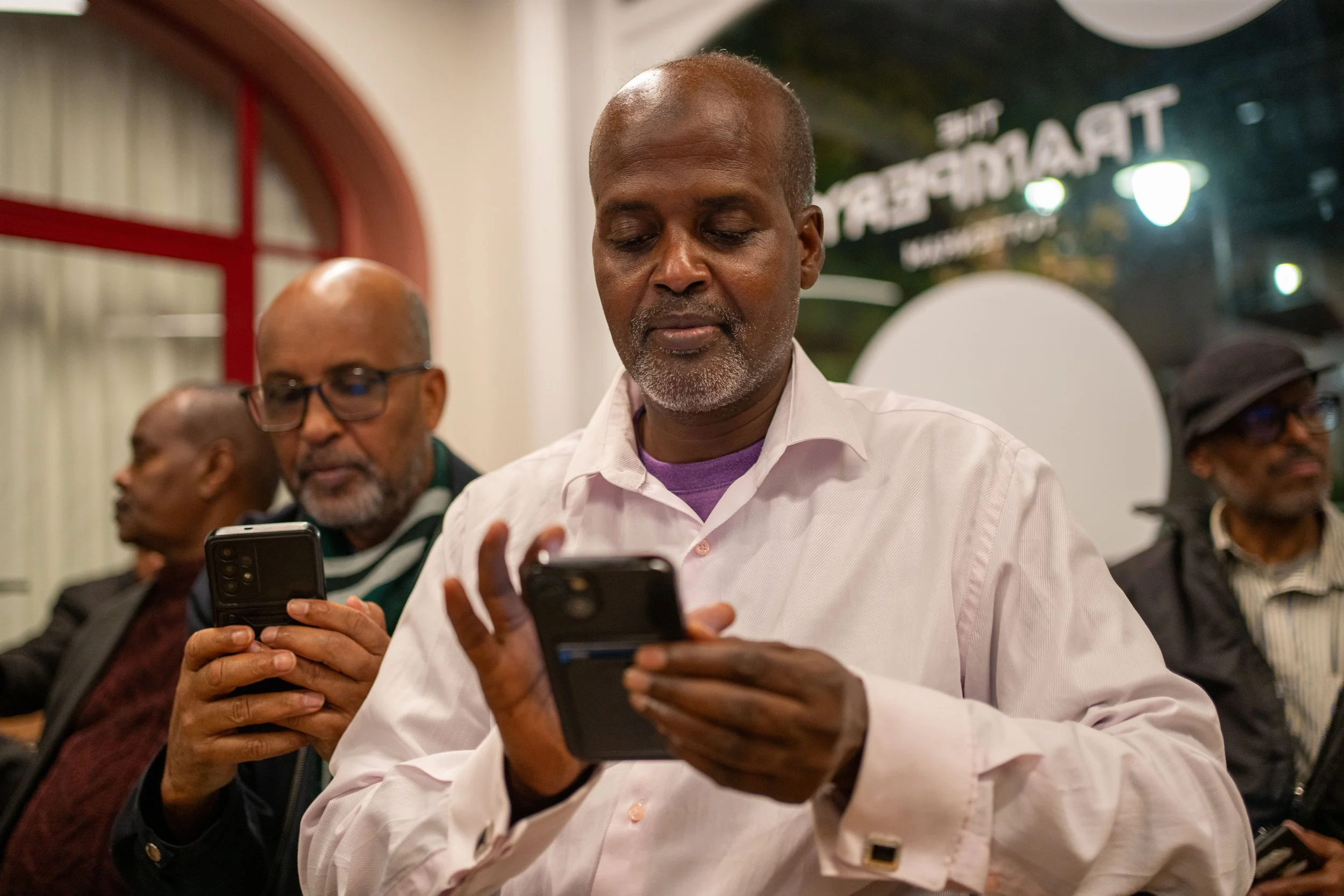
In a community workshop in London, a conversation about money rarely stays only about money for very long. People talk about who they send it to, why a particular transfer matters and what that money may pay for when it arrives. A transaction made on a phone in North London can contribute towards food, education, healthcare, an emergency or the everyday costs of supporting a family thousands of miles away.
For many people in the Somali diaspora, building a life in the UK has never meant disconnecting from home. Families, responsibilities, knowledge and resources continue to move between countries, creating relationships that are local and international at the same time.
Over the past two years, this has become an important strand of RISE Projects’ work. Through our partnership with IOM in the UK, we have supported Somali communities to understand digital remittances, compare options and build the confidence needed to use digital financial tools safely and effectively.
On the surface, that work is about financial literacy. In practice, it has also made us think more deeply about the position of diaspora communities themselves: not simply as communities receiving services in Britain, but as people whose decisions, expertise and resources have an impact far beyond the places in which they live.
Community, knowledge and opportunity in Haringey
Family support and locally led development in Somali regions
Sending money home is not a small act
The word remittance can make something deeply personal sound unusually technical. In reality, sending money home is often an expression of responsibility. It can mean supporting parents, contributing towards education, responding to a medical emergency or families sharing the pressures of everyday life across several countries.
The amounts involved in individual transfers may appear modest when viewed separately. Repeated across households, communities and countries, however, they become an important flow of resources between diaspora communities and the people and places to which they remain connected.
This is why the cost of sending money matters. If somebody sends money regularly, relatively small differences in fees accumulate. When costs fall, a greater share of what that person has earned reaches the family or community it was intended to support.
Programme figures reported by IOM United Kingdom .
Trust comes before technology
Digital inclusion is sometimes discussed as though the main challenge is simply showing somebody how to use an app. Our experience has been more complicated. People use financial systems they trust, and when the money being transferred is supporting somebody important to you, experimenting with an unfamiliar system can feel risky.
A cheaper digital option is not automatically useful if somebody does not understand how it works, whether the money is secure or what happens when something goes wrong. That is why community-led delivery matters. People need the opportunity to ask questions, compare choices and develop confidence rather than simply being told that a new technology exists.
The partnership works because different organisations bring different strengths. IOM brings expertise around migration, remittances and diaspora engagement. Financial partners understand the systems through which money moves. RISE brings the community relationships, local knowledge and trusted spaces in which those conversations can take place.
This is something we see repeatedly across our wider work: information becomes more useful when people encounter it through relationships and spaces they already know.
A closer look at RISE’s work with IOM
RISE co-founders Awale Elmi and Ahmed Mohamed reflect on migration, digital exclusion, remittances and what community-led financial literacy can mean for Somali diaspora communities.

From remittances to development
The conversation becomes even more interesting when we move beyond transfers between individual family members. Diaspora communities also organise collectively. People raise money for local projects, support responses to emergencies, share professional expertise and connect organisations overseas with people and resources in the UK.
Our work with IOM has increasingly brought RISE into those wider conversations. Alongside digital remittances, we have explored how crowdfunding and collective giving can support locally led development and how diaspora communities can use their position across two places to contribute knowledge as well as finance.
That matters because the relationship between diaspora communities and home should not be framed simply as one side giving and the other receiving. People living in Britain often carry knowledge of both contexts. They understand the systems, relationships and opportunities of the places where they live while retaining deep connections with communities elsewhere.
That perspective has value, particularly when development is led by people who understand the priorities of the communities themselves.

From community delivery to a wider international conversation
In January 2026, IOM brought together UK-based Somali professionals and community leaders at The Africa Centre to explore the contribution diaspora-led initiatives are making to locally owned projects across the Somali regions, including health, education and infrastructure.
RISE was represented by Awale Elmi, who joined a panel alongside Abdiaziz Arab and Safia Jama MBE, moderated by Killian Clifford. Our contribution drew on two years of work with IOM around digital financial literacy, remittances and crowdfunding, and the potential for those tools to strengthen collective giving and investment into locally led development.
A diaspora is not just an audience
The term diaspora is sometimes used as though it simply describes where somebody came from. Our work suggests a more active interpretation. Diaspora communities connect places, moving skills, ideas, resources and relationships across borders while contributing to the communities in which they live.
A person can build a life in Tottenham while supporting relatives elsewhere. A health professional in London may have knowledge that is useful to a locally led initiative overseas. Entrepreneurs may operate across markets. Community leaders may respond to issues in the UK while also helping organise around challenges affecting families abroad.
This means diaspora communities should not only be approached as audiences for engagement or recipients of information. They can be partners in development, bringing lived experience of more than one system and the networks required to connect them.
Our work may begin in Haringey, but the relationships within our communities extend far beyond it.
International work that begins locally
There can be a tendency to imagine international work as something that only begins when an organisation boards a plane. Our experience with IOM has shown something different. International relationships are already present inside places like Haringey, through families, remittances, professional networks, community organisations and the everyday responsibilities people maintain across borders.
For RISE, the opportunity is not to become an international development agency. Our strength remains our local foundation and the relationships we have built with communities in Haringey. But the lives of the people we work alongside do not stop at borough or national boundaries, and our understanding of community should reflect that reality.
The digital financial literacy programme provides a practical example. The workshop happens here, but its effect can reach a household elsewhere. Someone develops greater confidence using a digital platform in London, pays less to complete a transfer and more of the money they intended to send reaches its destination.
At the same time, the individual here gains something too: greater digital confidence, a better understanding of financial choices and more control over a system they may use regularly. The international and the local are not competing outcomes. They strengthen one another.
More than money moving across a border
A transfer from North London to a family member thousands of miles away may take only minutes. Behind it can sit years of family relationships, responsibility and connection.
Our work with IOM has helped people make those transactions more confidently and affordably. It has also helped RISE understand more clearly what diaspora means for our own organisation.
We are locally rooted, but many of the communities we work with are globally connected. Their lives contain relationships with more than one place, and those relationships carry knowledge, responsibility and opportunity in both directions.
Recognising that connection creates a much bigger possibility: community work that strengthens people here while respecting and supporting the contribution they continue to make back home.
Locally rooted. Connected beyond borders.
We work with communities and partners to turn trusted local relationships into practical support, stronger participation and new opportunities, in Haringey and across the wider networks our communities are part of.